
One Piece TCG, explained
OPTCG Guide
Every rarity and how often it turns up, why one card comes in a dozen prints at very different prices, how the game is played and how to build a deck.
Collecting
We'll go through every rarity and how often each one turns up, and clear up why one card comes in so many prints.
Rarities
You'll often find a card's rarity in its bottom corner, but not always, so the look of the card tells you the rest. Commons and Uncommons are plain; from Rare up, cards are foil.
TapClick a rarity to see how its cards look and what sets them apart
Bandai rarities
Community rarities
Finishes & one-offs
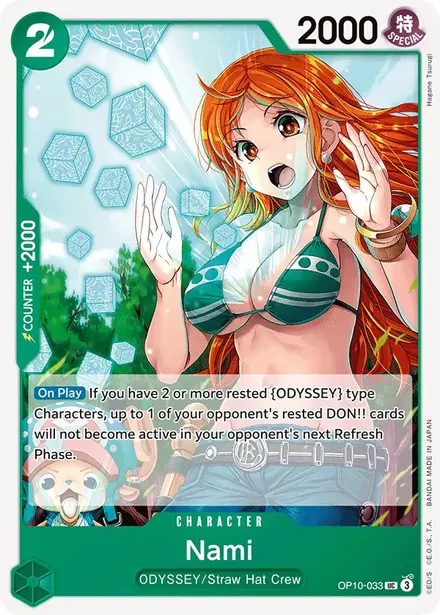
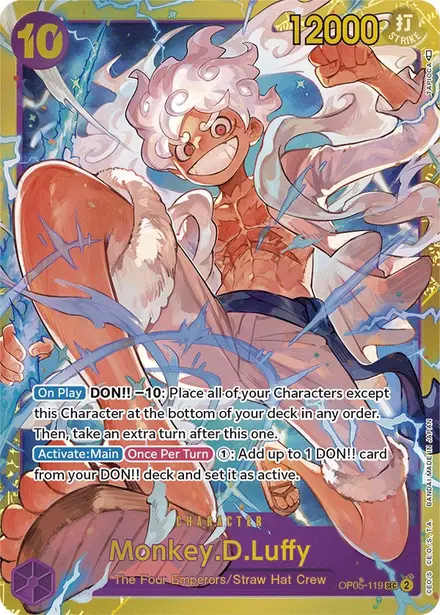
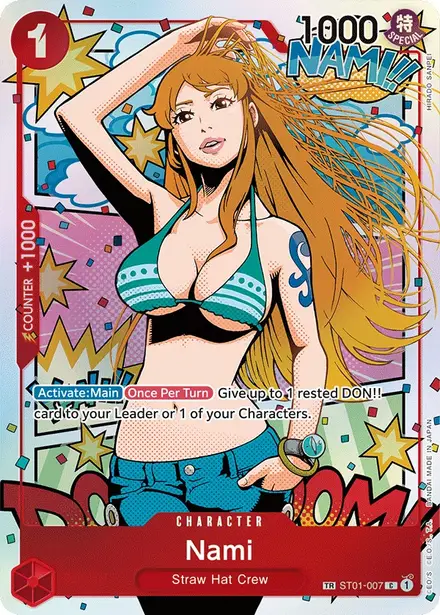
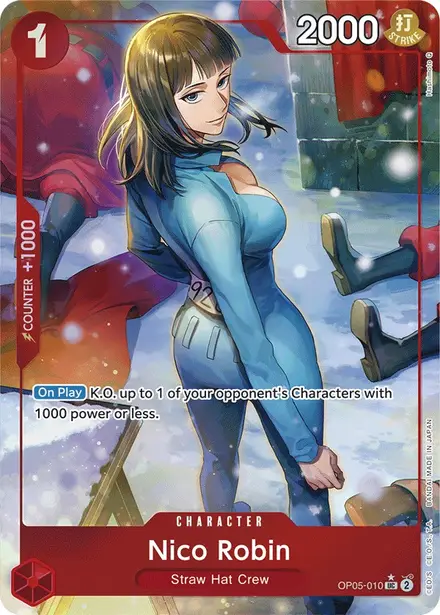
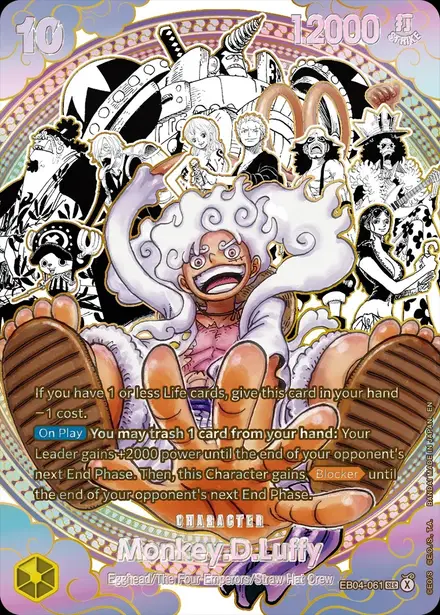
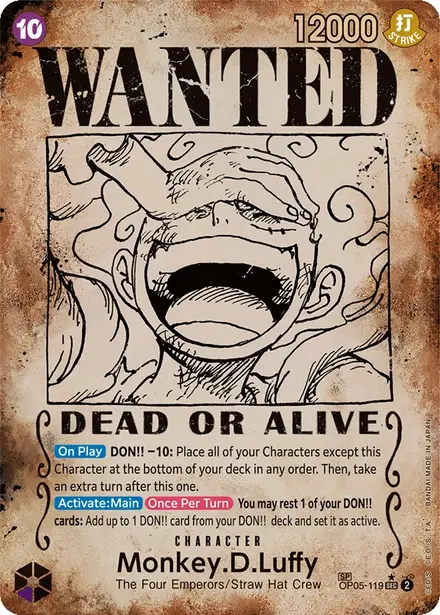
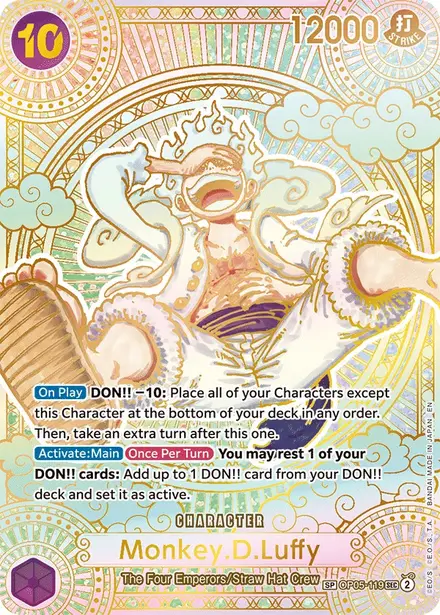
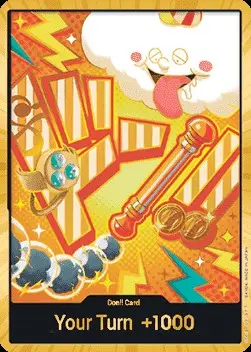
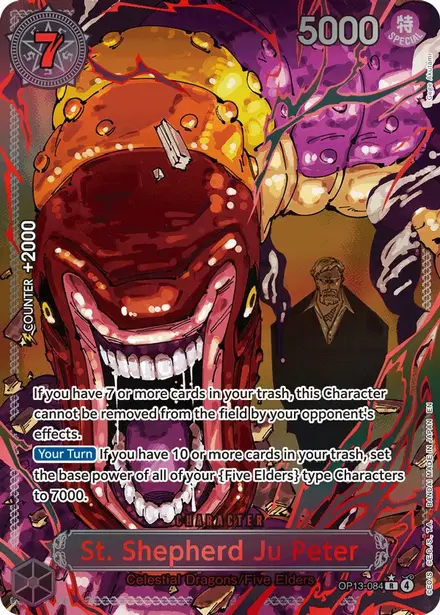
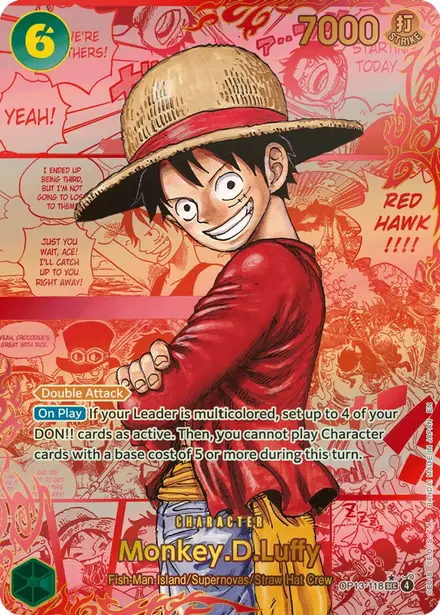
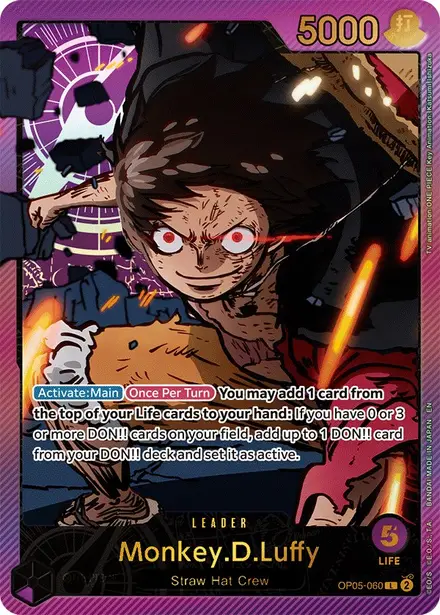
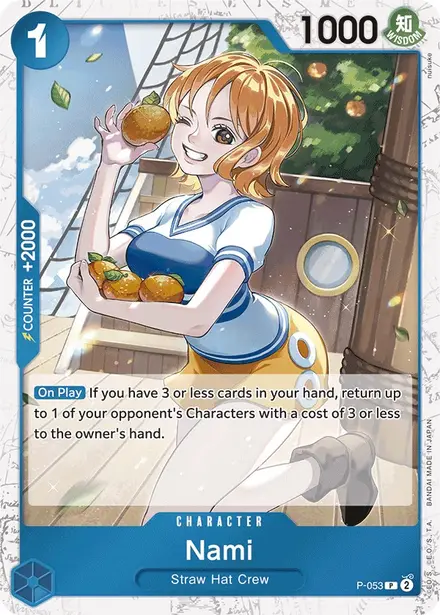
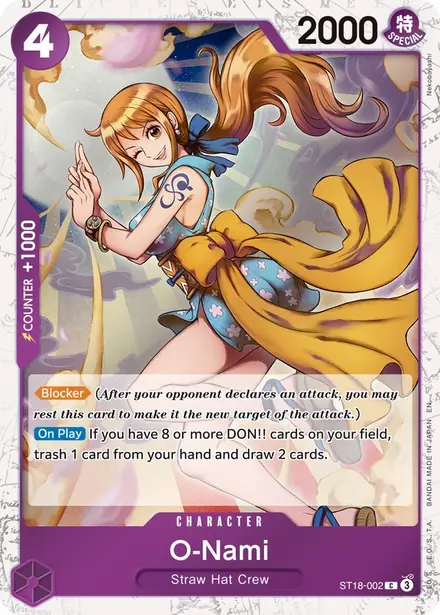
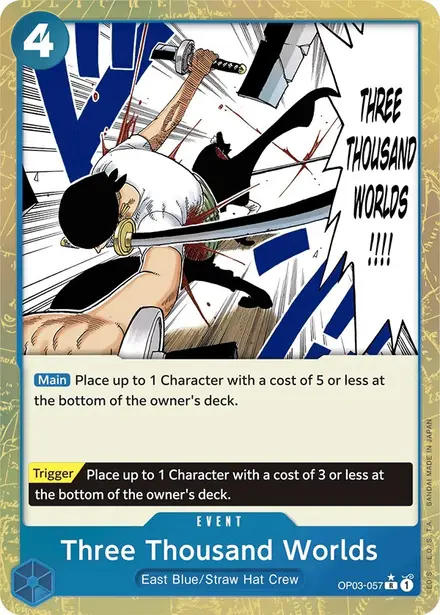
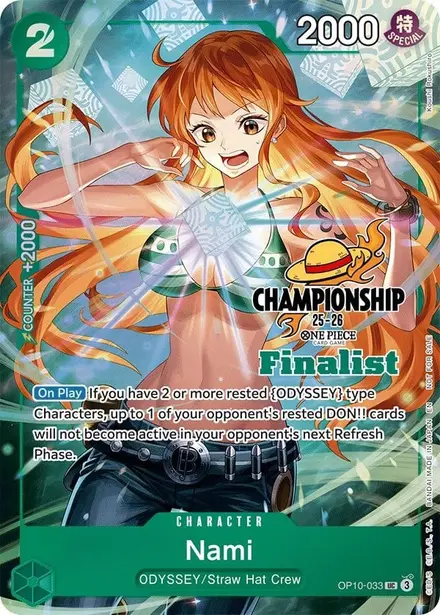
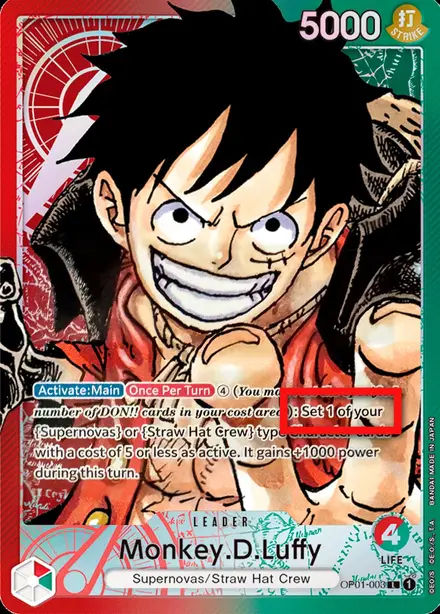
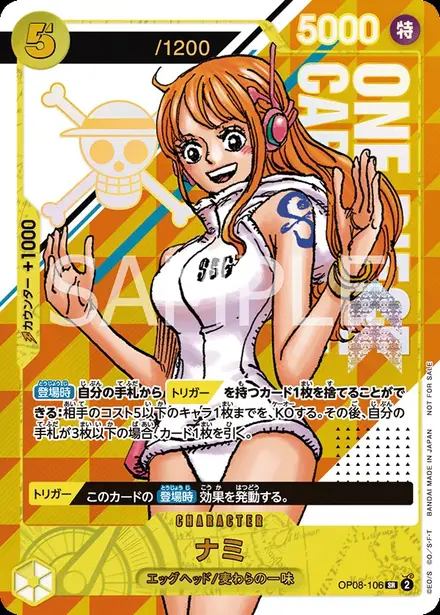
CCommon
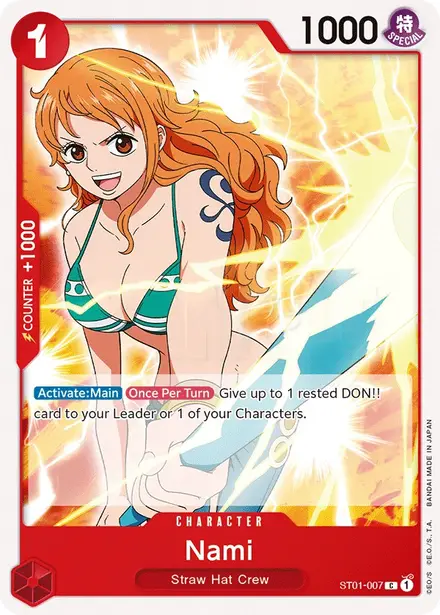
The simplest cards, with a plain white border and no foil. Most of every pack.
Pull rate~6 per pack
See every Common cardPull rates
How often each rarity turns up when you open packs, as the community counts it: Bandai publishes no odds. A box is 24 packs, a case 12 boxes.
In every pack
What a pack is mostly made of.Chase cards
What people open packs for.One card, many prints
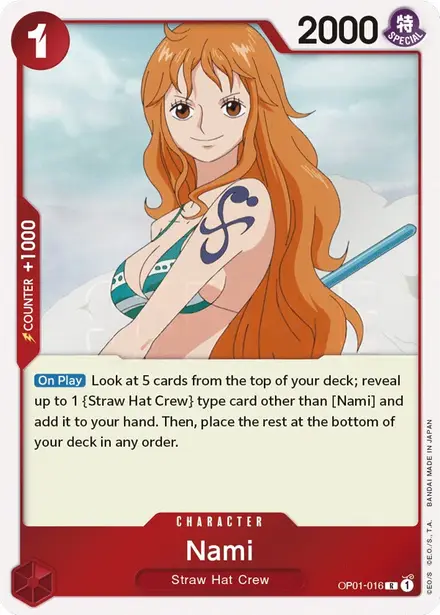
This is what confuses everyone at first. A card number is one card in the game, but Bandai prints it again and again: new pictures, new products, new finishes. Each is a print of its own.
The original
Where the card first came out.
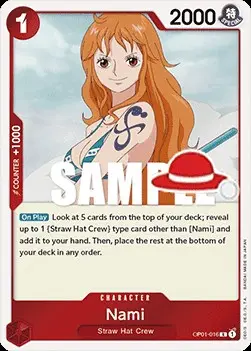
Reprint
The same picture again, in a later product.
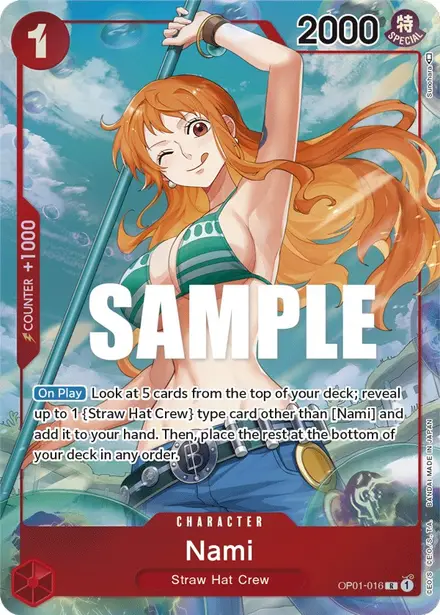
Alt art
A new picture in the same set, much rarer than the original.
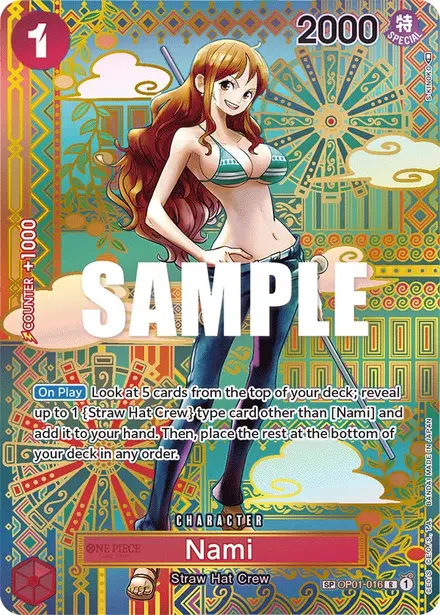
Special Rare
A card from an earlier set, drawn anew for a later one.
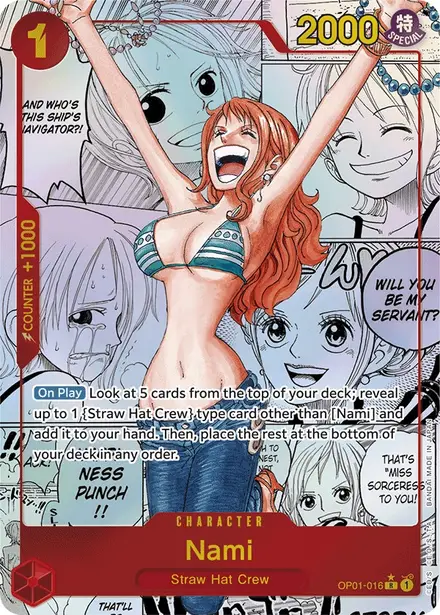
Manga
Iconic manga panels in the background: a second alt art, rarer still.
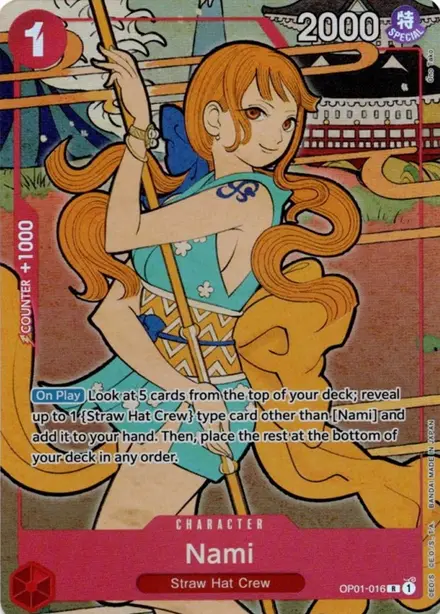
Promo
Given out at tournaments and events, as prizes and in promotions.
These are 6 of the 22 prints of OP01-016 on NamiTax. Search shows them as 14 tiles: reprints of the same picture share one, and ⇄ on the tile switches between them.
In a deck: one card
Every print of OP01-016 plays the same, and the 4-copy limit counts them together. A deck doesn't care which art or rarity your copy has.
To a collector: each its own
Each print has its own picture, its own rarity and its own price. On NamiTax each has its own page, and you collect them one by one.
A number keeps its first home
OP01-016 is card 16 of OP-01, and every reprint keeps that number. So the number alone doesn't say which product a copy came from.
Read the bottom corner
The picture says most of it. When it doesn't, the corner by the card number tells an original from an alt art.
R alone
The card's rarity and nothing else: the original.
A ★ over the R
An alt art. The gold lettering says which: the Manga.
Not every alternate art prints the star: the earliest English alt arts, OP-01's Nami among them, don't.
Sets, packs and boxes
Cards come out in products, and every product has a code. The code at the start of a card number is the product it first came out in.
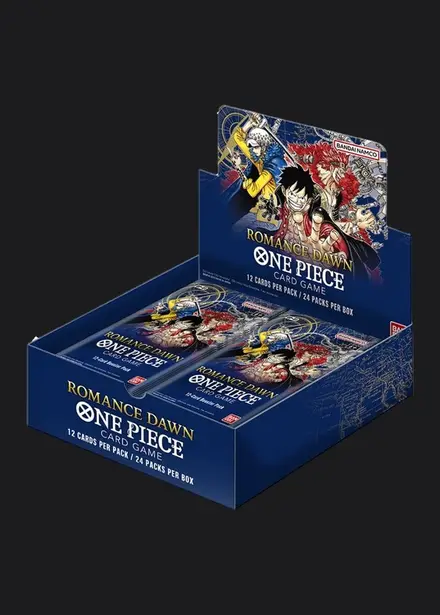
Booster sets
The main sets, each with its own cards from Common to Secret Rare, and their parallels.
OP-01 Romance Dawn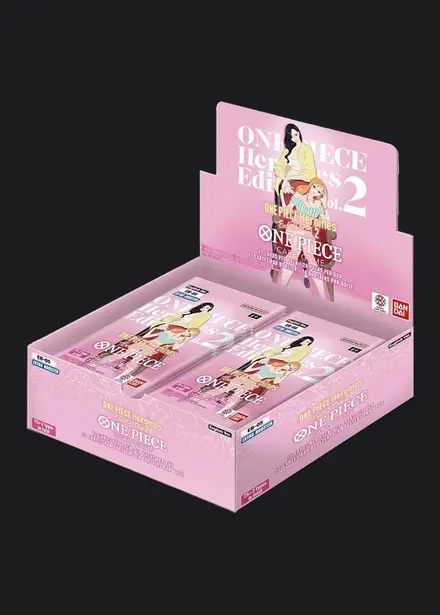
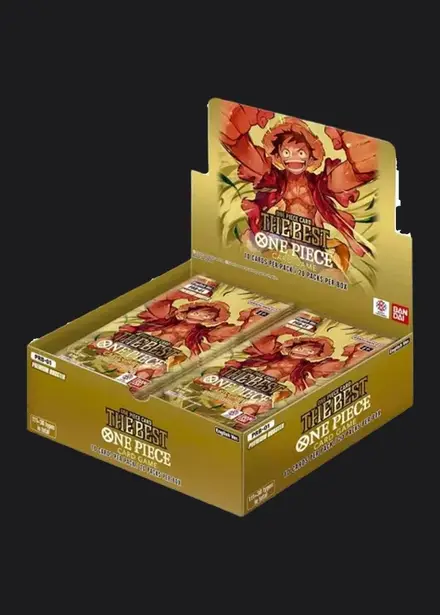
Premium Boosters
Favourites reprinted in new finishes and full arts, with a few cards of their own.
PRB-01 The Best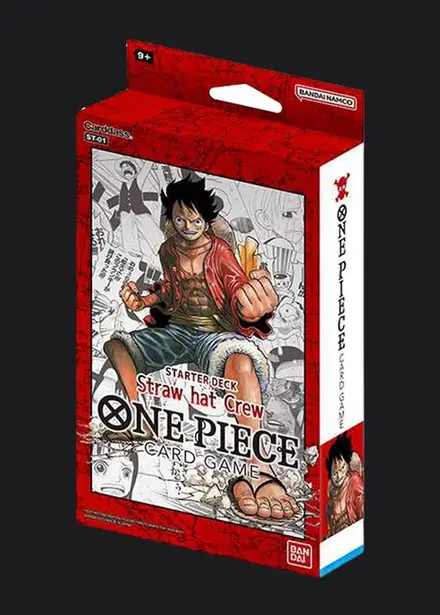
Promos
Numbered on their own (P-001 on). From events, tournaments, magazines and gift sets.
What a booster comes in
Pack
12 cards
An English booster pack.
Box
24 packs
Or display.
Case
12 boxes
288 packs.
Counted in boxes: a Secret Rare is 1 in ~2 boxes, a Special Rare 1 in ~6 boxes, a Manga 1 in ~3 cases.
The cards
Now we'll read a card: what each part of it tells you, and the categories a deck is built from.
Reading a card
Every card prints the same things in the same places. Point at a part of the card, or at a note, to light both.
Cost
The DON!! it takes to play the card. Nami costs 1.
Counter
When your Leader or a Character is attacked, trash this card from your hand to give it +1000 power, enough to survive an attack it would otherwise lose.
Effect
What the card does. The coloured tag says when: On Play, as it comes down.
Category
What sort of card it is: Leader, Character, Event or Stage.
Colour
Every card has one or more colours, and a deck can only hold cards in its Leader's colours.
Attribute
Slash, Strike, Ranged, Special or Wisdom. A few effects care about it.
Power
What it fights with. An attack wins when the attacker has at least as much power as the card it attacks.
Name
The card's name.
Number, rarity, block
Card 16 of OP-01, its rarity (R) and its block (1). Blocks leave Standard, the main tournament format, oldest first: block 1 left in April 2026.
Type
Straw Hat Crew, Navy and so on: what Leaders and searchers name. A card can have several.
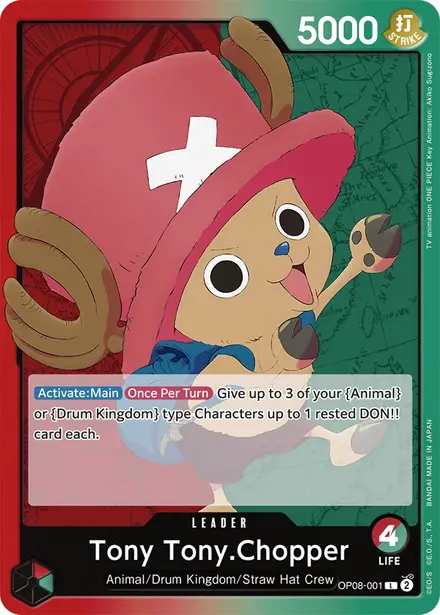
A Leader is built differently
One per deck, face up from the first turn. It sets the deck's colours and how many hits you can take.
No cost, no counter
A Leader starts on the table, never in the deck or the hand, so this corner stays empty.
Two colours
This is a Blue and Yellow card, so a deck built around it can hold Blue and Yellow cards.
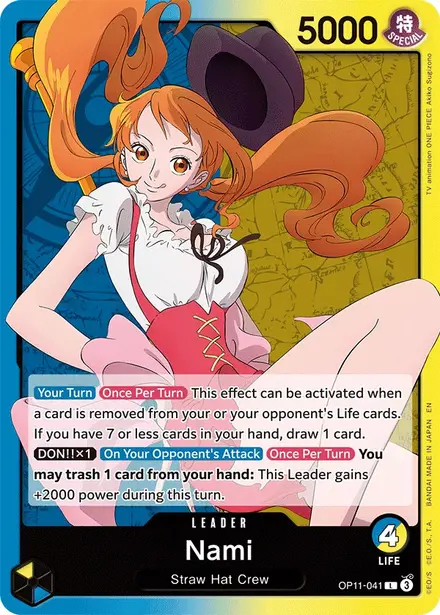
Power
The same as on deck cards. 5000 is the most common.
Life
Nami starts with 4 Life cards: four hits she can take, and the fifth loses you the game.
Card categories
Four categories make up a deck and its Leader, and the DON!! cards pay for them. The category is printed above the name.
Leader
One per deck. It sets the deck's colours and has Life, power and an effect.
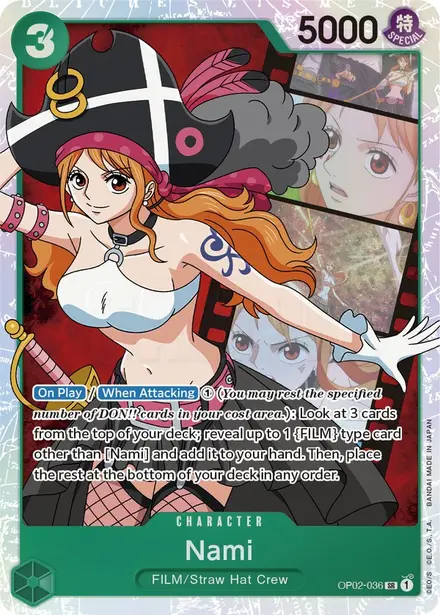
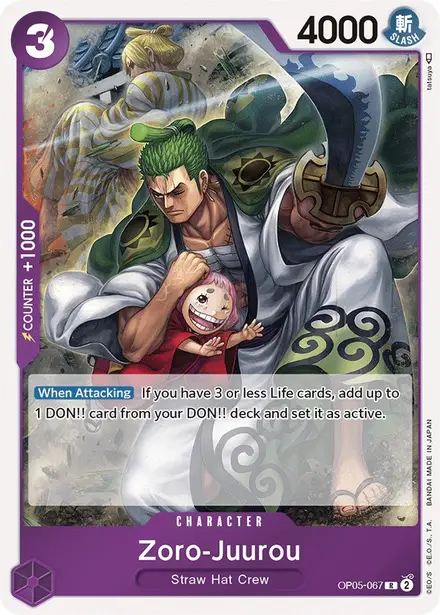
Character
Your playable cards. Each costs DON!! to play, has a power, and may have an effect.
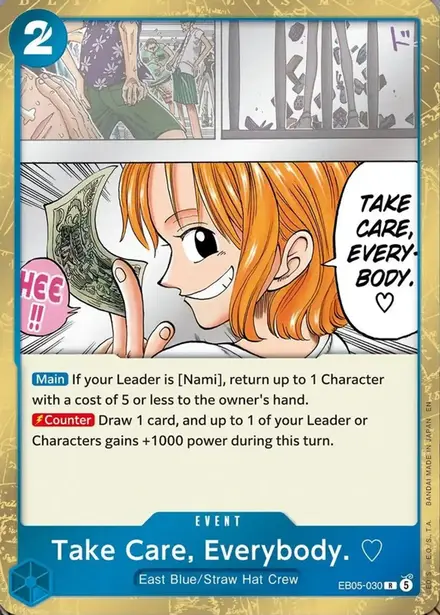
Event
Played once for its effect, then trashed. Some on your own turn, some while you defend.
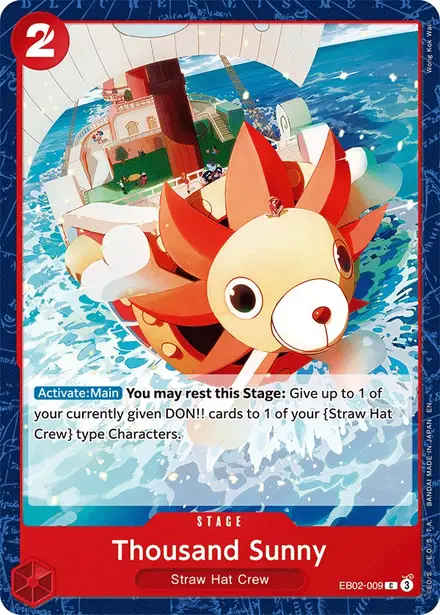
Stage
Stays on the table, one at a time. Usually a lasting boost or extra DON!!.
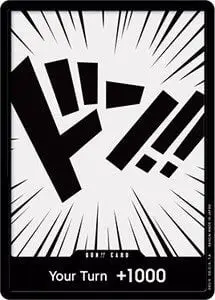
DON!!
The ten resource cards, kept apart from the deck. You pay for your cards with them.
Playing
We'll go through the game step by step: what you play with, how a turn goes, and how an attack is won or stopped.
What you play with
Two players, one Leader each. Knock out the other Leader's Life before they knock out yours.
1Leader
On the table from the start, never in the deck. It sets your colours and your Life, and its effect works all game.
50Deck cards
Characters, Events and Stages. At most 4 copies of a card number, every card in your Leader's colours.
10DON!!
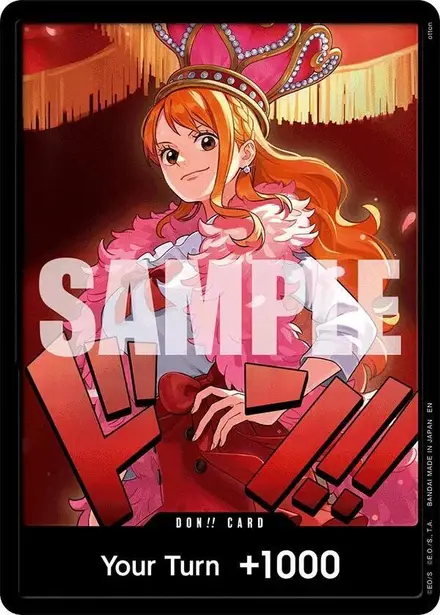
The resource deck, kept apart from the 50. Every DON!! card plays the same; only the art differs.
The board
Both players lay out the same areas: yours at the bottom, the opponent's facing you at the top. Point at an area to see what it's for.
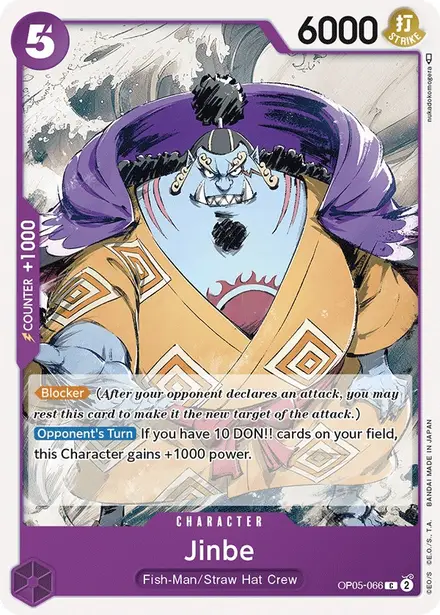
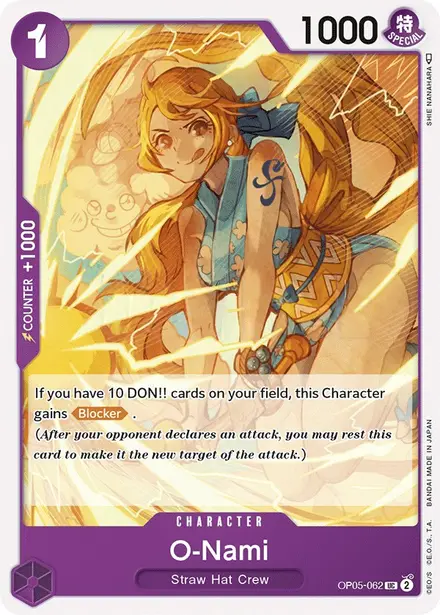
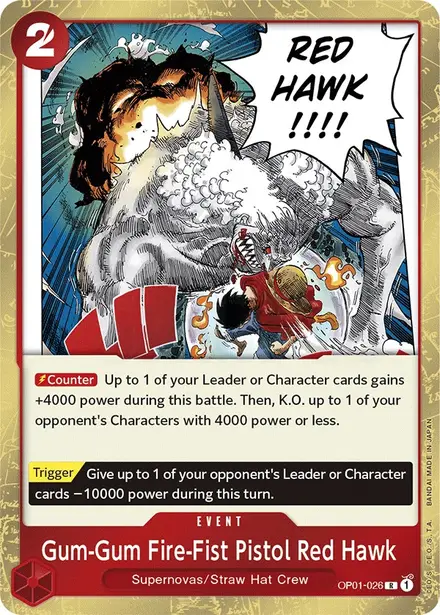
Leader
On the table from the start, face up. If it's hit with no Life left, you lose.
Characters
Up to 5. They attack, block and can be knocked out.
Stage
One Stage at a time: an effect that stays on the table.
Life
Face down and sideways. Each hit on your Leader moves one to your hand.
Deck
Your 50 cards, face down. You draw from the top; run out and you lose.
DON!! deck
Your 10 DON!! cards, the game's currency. Spend them to play cards from your hand, or attach them to your Leader or a Character for +1000 power each during your turn.
Cost area
Each turn, add 2 DON!! from your DON!! deck here. You can spend as many as you have here. A spent DON!! is rested, not removed: at the start of your next turn, every rested DON!! stands up again.
Trash
Face up: knocked-out Characters, used Events and counters.
Hand
Your cards in hand: don't show them to your opponent. Play one by paying its cost, top left, in DON!!. A card with a counter printed on it can also defend from here.
A game, step by step
From the setup to the last hit, each step played out on the board. DON!! grows every turn, so a game builds up to its big cards.
Set up
Before the first turn, both players set up their side the same way: Leader, deck and DON!! deck in their areas, a hand of 5, then the Life cards.
Put your Leader in the Leader area, face up.
Draw and add DON!!
Each turn you draw 1 and add 2 DON!!, up to 10. Going first, your first turn has no draw and 1 DON!!.
Draw 1 card from the top of your deck.
Spend DON!!
DON!! has two uses:
- Play a card by resting as many DON!! as it costs (turned sideways, they can't be used again this turn).
- Or attach one or more DON!! to your Leader or a Character by putting them under it: +1000 power each, on your turn only (they don't help it defend).
At the start of your next turn every DON!! comes back to your cost area and stands up, ready to spend again.
Play a Character that costs 2 by resting 2 DON!! (turned sideways, they can't be used again this turn).
Attack
Rest your Leader or an active Character to attack the opponent's Leader or one of their rested Characters. An attack lands when its power is at least the defender's; a Character it lands on is knocked out and trashed. A Character can't attack on the turn it's played, unless it has [Rush].
Rest your Character to attack (turn it sideways), and attack the opponent's Leader.
Block and counter
The defender can counter: trash Characters from their hand to add the counter printed on them (+1000 or +2000) to the defending card, or play [Counter] Events. A [Blocker] on the table can also rest to take the attack instead.
The opponent rests a Character and attacks your Leader.
Take a hit, or lose
A hit on a Leader moves one of its Life cards to the hand. If that card says [Trigger], its effect can be played for free instead. A Leader hit with no Life left loses the game, and so does a player whose deck runs out.
An attack lands on your Leader.
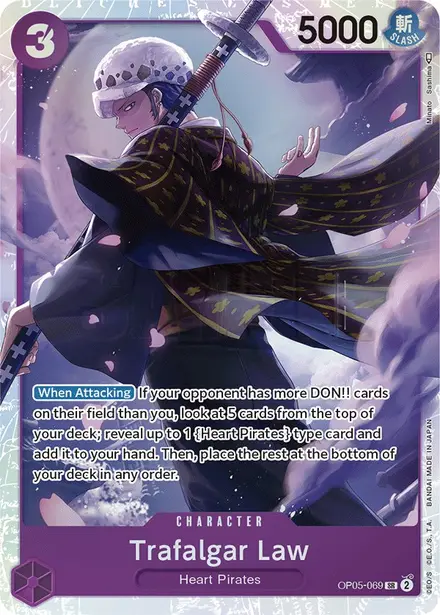
DON!! on each turn
So a card's cost tells you when it can come down: a 5-cost card on turn 3 either way, a 10-cost card on turn 5 going second and turn 6 going first.
Keywords
Printed in coloured tags at the start of an effect: when it works, how often, and what it needs.
- BlockerRest it to take an attack meant for something else.
- RushCan attack on the turn it's played.
- Double AttackA hit takes 2 Life.
- BanishThe Life it hits is trashed: no card to the hand, no Trigger.
- On PlayDoes something when played. Searchers and removal mostly work this way.
- When AttackingDoes something each time it attacks.
- Activate: MainUsed on your turn, when you choose.
- On K.O.Does something when it's knocked out.
- DON!! x1Works while at least 1 DON!! is on the card.
- Once Per TurnOnly once each turn.
- CounterAn Event played while you defend.
- TriggerA free effect when the card is taken from your Life.
Putting it all together
One late-game turn, where the effects decide it: a Blocker taken out, a counter, a Trigger and a Rush to finish. Each card is shown big as its effect is used.
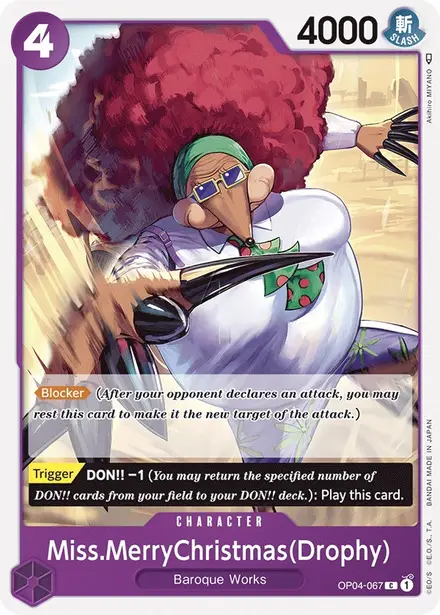
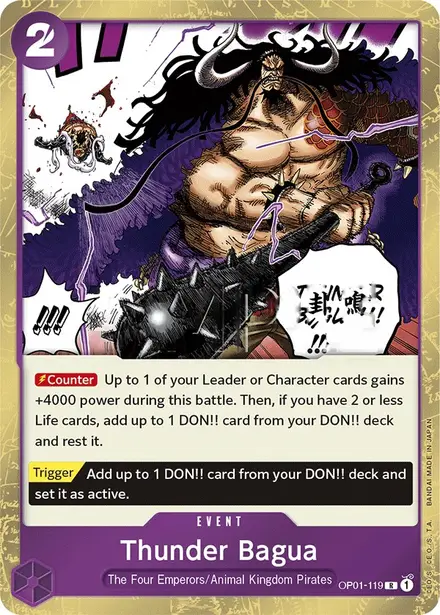
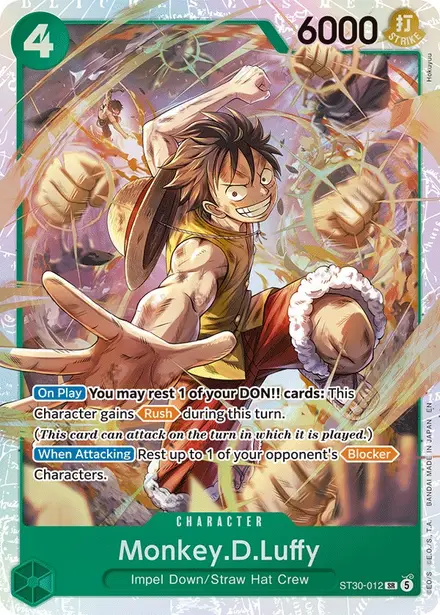
Late in a game, your turn, with all 10 DON!!. They're down to 1 Life, behind two [Blocker]s.
Deck building
Then we'll build a deck: the rules every deck follows, what players look for in one, and the odds of drawing what you built it around.
The rules
Every deck, in every format, follows these.
- 1 Leader, 50 deck cards, 10 DON!!
- At most 4 copies of a card number
- Every card in the Leader's colours
- No banned cards
Formats and the ban list
Which cards a tournament allows: by the block icon on the card, and by Bandai's ban list.
- Standard
- The newest cards: Block 1 left in April 2026, and the oldest block leaves about once a year.
- Extra Regulation
- Every card ever printed.
Banned in both, as of 12 October 2026
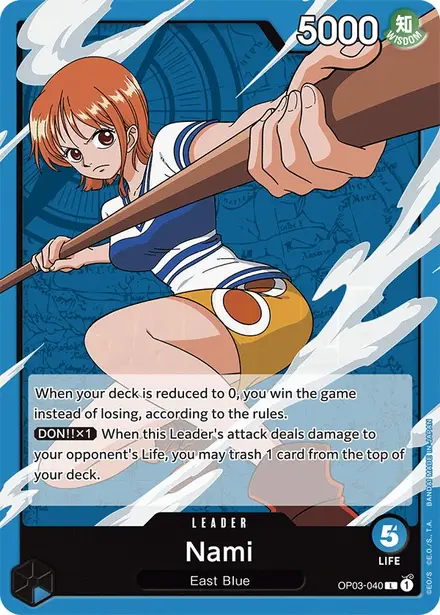
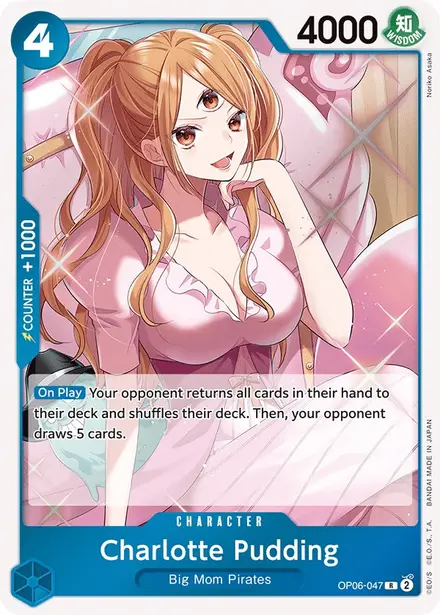
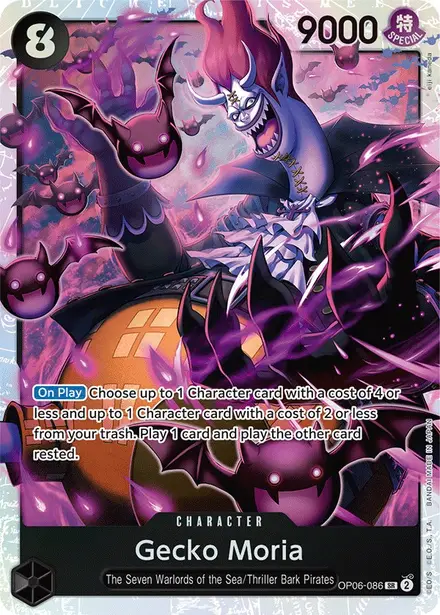
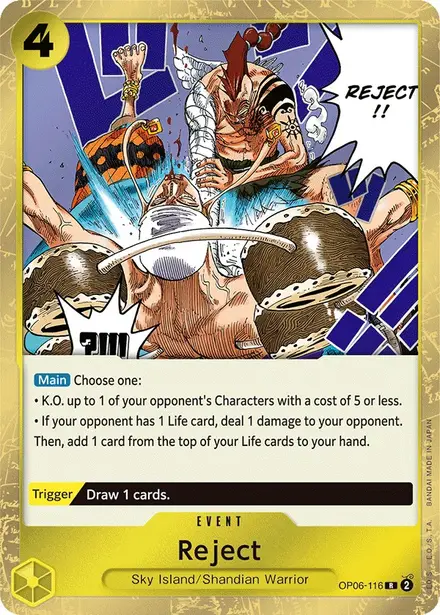
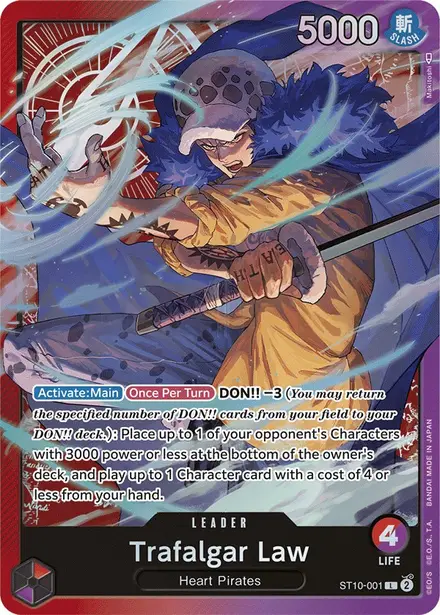
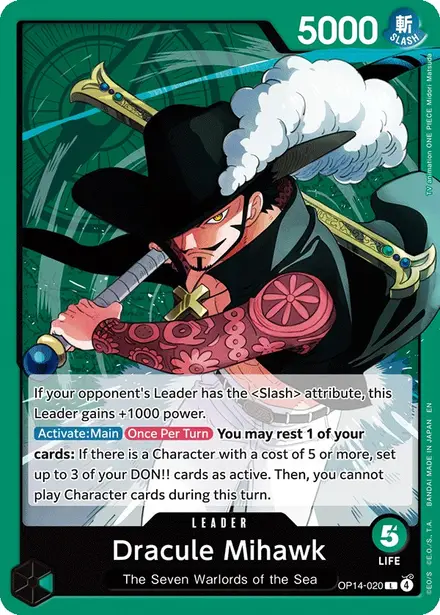
Never in the same deck
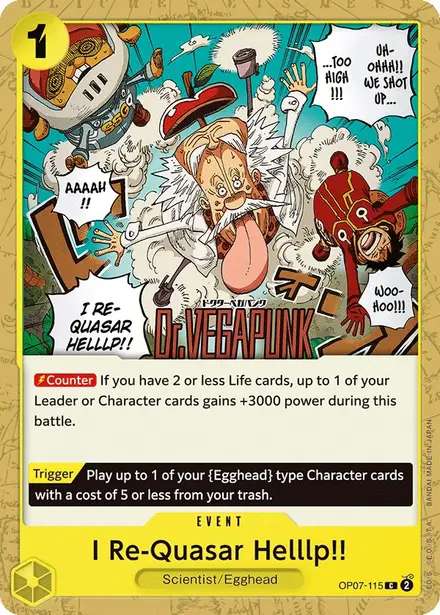
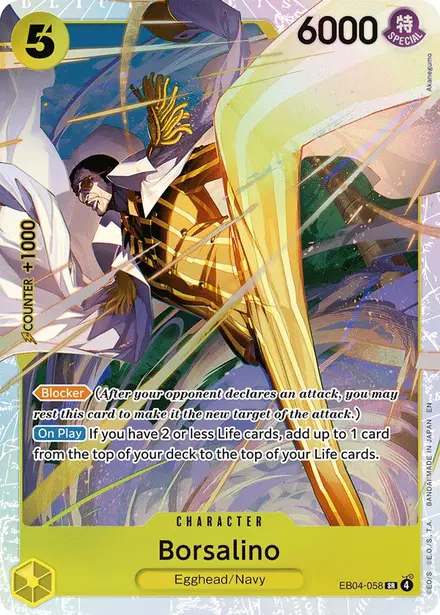
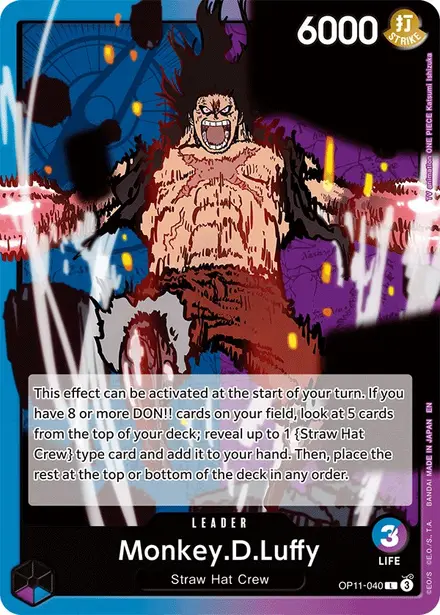
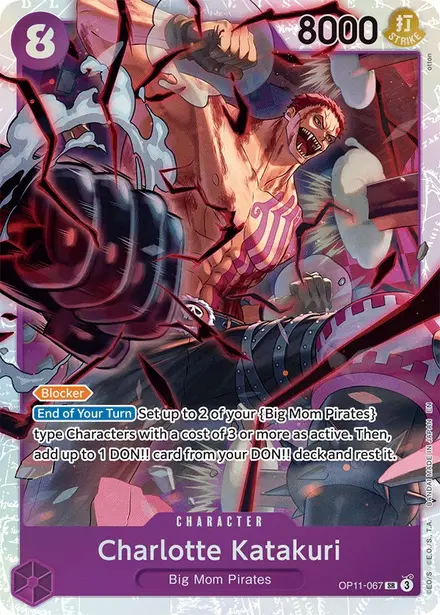
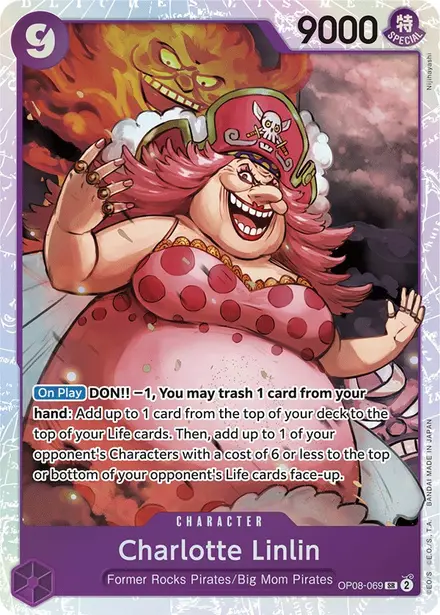
What makes a deck work
What deck guides look at, roughly in the order they look at it. Starting points, not rules.
- The Leader's effect
- Everything else in the deck is there to feed it: a type it names, a cost it cares about, Life it wants to lose or keep.
- Counters
- 8 to 12 cards with +2000 is a usual start, with +1000 Characters and [Counter] Events on top. Too few and the deck dies to one more attack.
- Blockers
- 4 to 8. A second shield that stays on the table instead of costing a card from the hand.
- Searchers
- Cards that look at the top 5 and take one of a named type. 4 to 8, and most of the deck should carry the type they name, or they miss.
- Cost curve
- Most cards at cost 2 to 5, and 2 to 4 finishers at 8 or more. A hand of expensive cards does nothing for the first turns.
- Card kinds
- Usually 32 to 38 Characters, 6 to 10 Events (mostly [Counter]) and 0 to 4 Stages.
- Triggers
- No set number: Leaders that care about Life run more of them.
Drawing what you need
The chance your hand holds at least one of a card (or a kind of card, like searchers), from a shuffled 50.
1copy
- 10%
In the first 5
- 19%
Mulligan if not
- 21%
And the first draw
4copies
- 35%
In the first 5
- 58%
Mulligan if not
- 62%
And the first draw
8copies
- 60%
In the first 5
- 84%
Mulligan if not
- 87%
And the first draw
12copies
- 76%
In the first 5
- 94%
Mulligan if not
- 96%
And the first draw
4 copies of a card show up in the opening hand only about a third of the time. 8 to 12 cards that do the same job, like searchers, are what make a deck play the same way every game.
Try it with real cards
Pick a Leader in the Deck Builder and fill the 50 from the whole catalogue. It flags anything that breaks the rules above as you build.
Open the Deck BuilderUsing NamiTax
Last, where NamiTax comes in: finding any card, what its page tells you, and keeping track of your own.
Search the way you'd say it
A name, a rarity, a print or a card number, in any mix. Give it a go:
Card Scanner
Point your camera at your cards and NamiTax names them, a whole binder page at once. The camera button is in the search bar.
Sets & Collections
Every set and promo set with all its cards, and collections such as Full Arts, Gold Leaders and Pre-Release Stamps.
Browse the setsTrends
What's being looked at this week, which prices moved, and what's new.
See what's moving
A card's page
Every print has a page of its own, and it's where the prices are.
Price history
How the price has moved over time, in your currency.
Price comparison
What each shop asks for the print, side by side, with listings from other collectors.
Last sold
What copies actually sold for lately.
Your own listing
Selling a copy? Add your listing, with photos, to the card's page and your profile.
Every other print
The card's other pictures and products, each a press away.
Your cards
Sign in and NamiTax keeps track of what you own, what you're after and what you'd pay for it.
Personal Collection
Every card you own, what you paid and what it's worth today.
Favorites
Sort the cards you're after into your own lists, with your own names and covers.
Wish Price
Set the price you'd pay for any card, and NamiTax flags it the moment it gets there.
Profile & Listings
Promote your listings from other websites on NamiTax. Anyone can open your profile, a public page with all your listings.